

Application: Evenly coat and glaze ceramics and technical ceramics
Glazes, engobes and functional coatings
Ceramic components receive glazes, engobes, colours or functional suspension coatings. In conventional ceramics, firing produces decorative, dense, durable or easy-to-clean surfaces. In technical ceramics, coatings can serve specifically as protective, insulating, adhesion-promoting, conductive or marking layers.
Not every ceramic suspension is sprayable. Grain size, solid content, viscosity and binder determine which nozzle and material supply can be used. The firing result also depends on layer thickness, drying and firing curve.
Typical components and applications
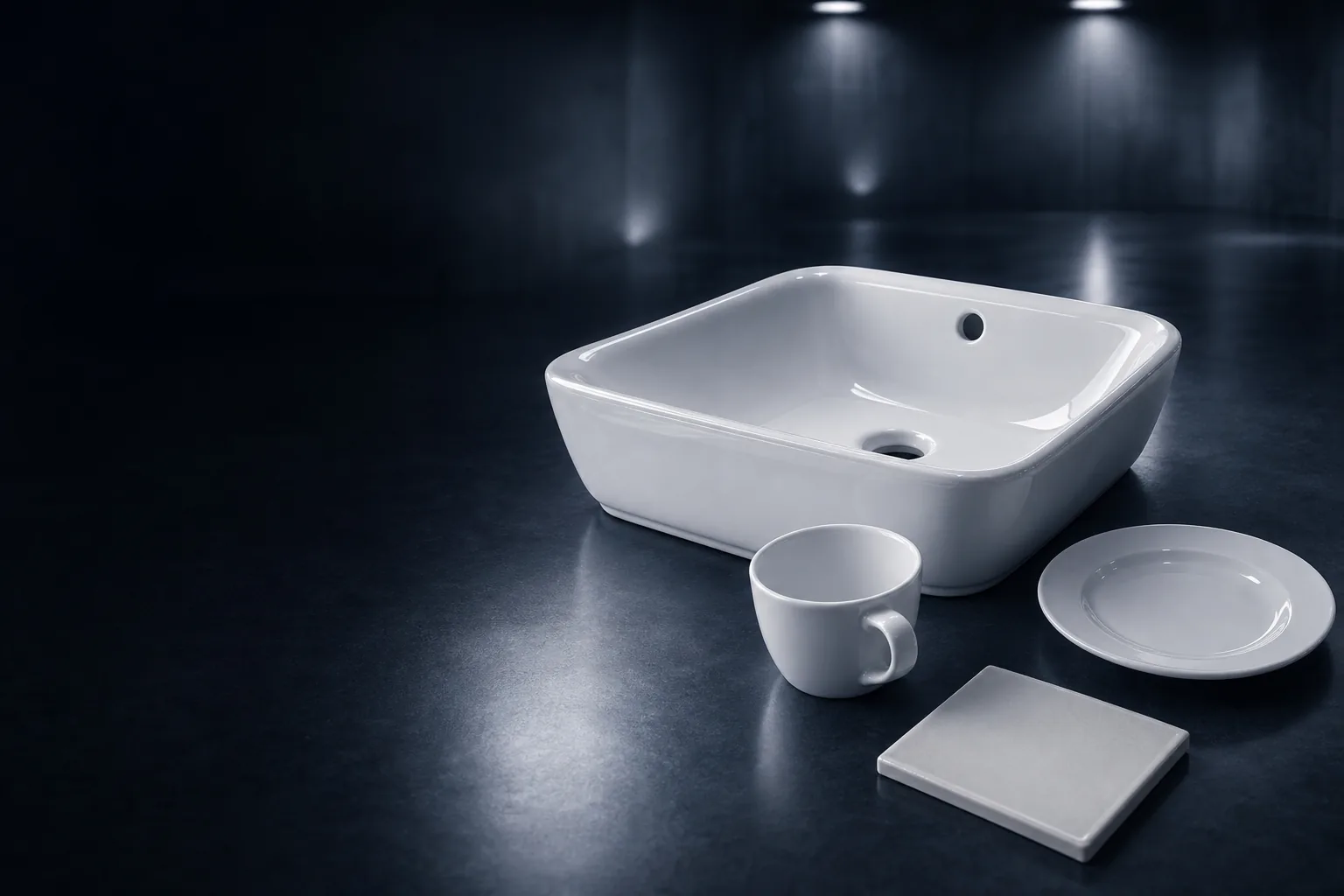
- Sanitary ceramics and tableware
- Tiles, bricks and ceramic building materials
- Decorative, colour and effect glazes
- Engobes and topcoats
- Insulators and technical ceramic components
- Electrical, thermal or tribological functional surfaces
- Markings and selective coatings
- small, complex or rotationally symmetrical ceramic parts
Controlling abrasiveness and sedimentation
Many ceramic media contain a high proportion of mineral solids. These particles can settle in the tank and material lines and wear out nozzles, needles or valve seats. A stable process therefore requires a suitable stirring concept, short or flow-efficient material paths and sufficiently large flow cross-sections.
- even layer thickness and colour effect
- Continuous stirring against sedimentation
- wear-resistant nozzles and components in contact with the material
- good edge and geometry cover
- precise partial surface coating for technical ceramics
- rapid flushing during production interruptions
Distinguishing conventional ceramics from technical ceramics
In the case of dishes, sanitary ware or building materials, cover, colour effect, shine and a closed surface after firing are often in the foreground. Technical ceramics, on the other hand, are often coated only on selected functional surfaces. There, electrical insulation, defined wetting, protection or a later connection with other materials can be crucial.
These differences affect application. Large ceramic components require broad, uniform spray patterns. Small technical components generally require precise positioning, small quantities and clearly defined partial areas. In both cases, the wet layer reaches its final function after drying and firing.
- decorative full surface coating
- Selective functional surfaces
- different absorbency of the ceramic bodies
- several thin layers instead of excessive application
- Comparison of spray pattern and firing result
Krautzberger spraying and material supply technology
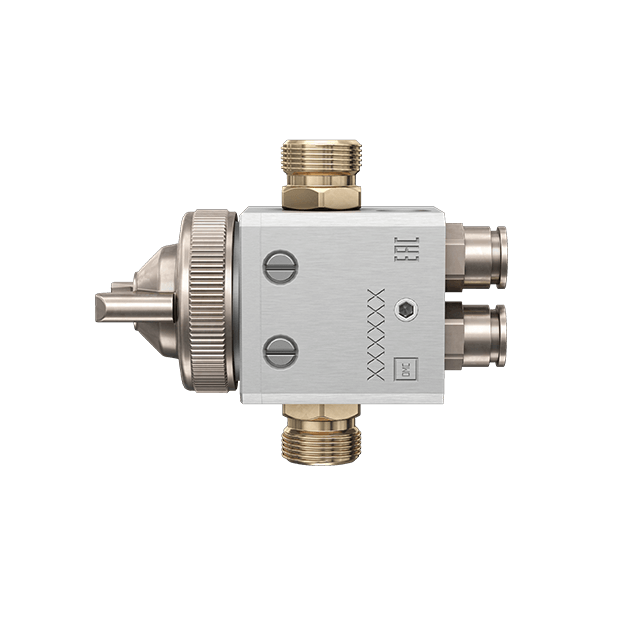
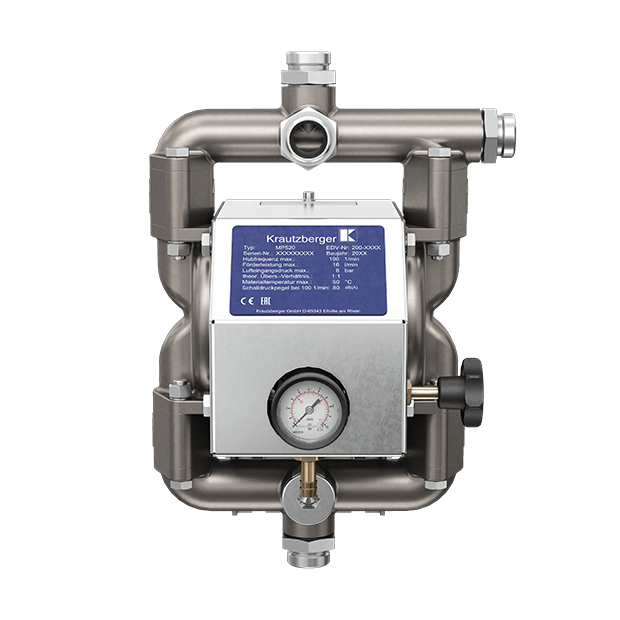
For glazes and media with a high solids content, robust spray guns with suitable material flow cross-sections, needleless or diaphragm-closed designs and nozzles made of wear-resistant materials can be considered. Depending on the process, the material is supplied by agitated tanks, material pressure vessels or pumps.
Material pressure regulators stabilise the application quantity. In automated systems, spray guns can be integrated into lifting devices, axes or robots. Compact spray guns and finer nozzle combinations are available for small technical components and selective surfaces.
Automation and component movement
Rotationally symmetrical ceramic parts can be rotated during spraying to achieve a uniform all-round coating. Flat or complex components, on the other hand, are guided by lifting movements, axes or robots. The movement path shall be designed so that edges and recesses are sufficiently coated.
When several coats are applied, a flash-off or drying phase may be needed between spray stations. The sequence of different glazes or functional media must also be coordinated with the subsequent firing process.
- Rotation of rotationally symmetrical components
- Lifting and robot movement for complex geometries
- Intermediate drying with multi-layer construction
- reproducible recipes for different ceramic parts
Process parameters before firing
The spray application must take into account the moisture of the green body, surface structure and absorbency. A too wet layer can run or tear when drying. Too dry application can lead to rough, incomplete surfaces. Overlap, spray spacing and drying between several layers also influence the result.
The final glaze or functional effect occurs only after firing. Therefore, spraying process and firing process must be evaluated together, even if Krautzberger focuses on the application of the liquid medium.
Benefits for your production
- Uniform glaze and coating layers
- fewer deposits and less clogging
- reduced wear due to suitable material selection
- Stable processing of sedimentating media
- Flexible manual and automatic processes
- coordinated solution for stirring, material delivery, pressure regulation and spraying
Tests with original medium and ceramic component
Glazes and ceramic suspensions differ considerably in solids content, grain size, viscosity and abrasiveness. The Krautzberger technical test centre tests the original material and a sample component. The stirring concept, material delivery, nozzle design, spray pattern and layer distribution can be coordinated during these tests.
The firing result and the final material properties are validated by the operator together with the glaze or material supplier.
Related products
All products

Suitable solution for ceramic coatings
Are you looking for a spray gun, a robust material supply or an automated system for glazes, engobes or functional ceramic coatings? Krautzberger supports you with the technical design.
Talk to us about solids content, grain size, component geometry, layer thickness and production output.
Industries for this application
For sanitary ceramics, dishes and technical components, a sprayable medium can perform very different tasks. Whether glaze or functional layer: solid content, layer thickness, drying and firing curve must fit the respective workpiece.

