

Application: Spray formwork oil and release agents evenly onto concrete moulds and formwork
What this application is about
Various wet-spray processes are suitable for industrial application. Depending on the medium, component geometry, batch size and quality requirements, application can take place with a manual paint spray gun, a coating gun, an automatic spray gun or within a painting and coating system.
What the coating must achieve in the process
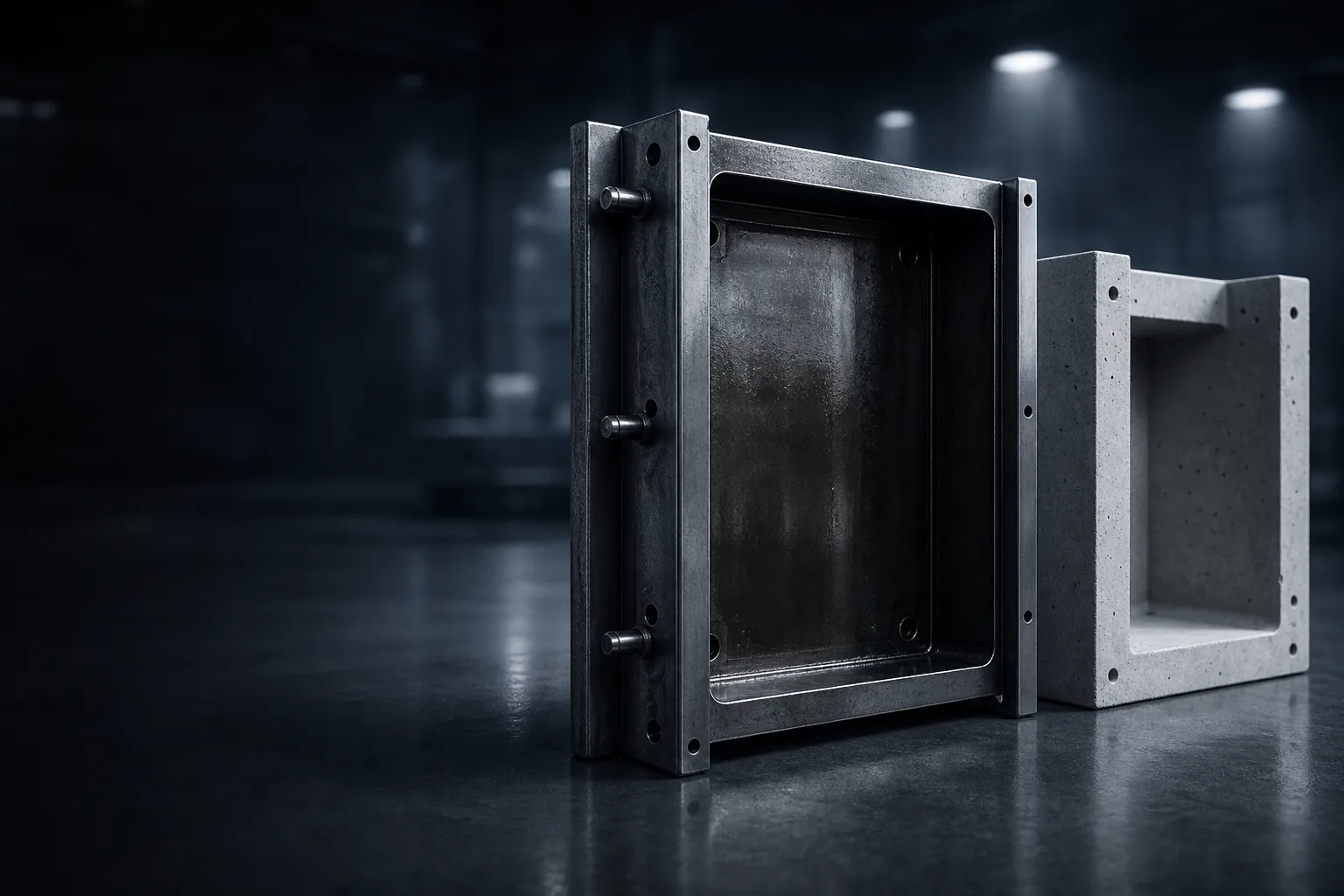
The application mainly concerns steel, plastic, wood and composite formwork. The required effect occurs only when coating material, substrate, layer thickness and subsequent drying or curing fit together. The spraying process must therefore be adapted to the concrete material system and the real production conditions.
Alongside surface quality, material consumption, cleaning effort, system availability and reliable repeatability also matter. A sound technical solution therefore combines controlled atomisation with a stable material supply that is easy to regulate.
Challenges in spray application
Even small fluctuations in material pressure, viscosity, distance or movement control can change the coating visibly or functionally. Typical requirements include:
- thin, closed release film without puddles
- even wetting of large formwork surfaces
- Adaptation to different formwork materials
- Processing of oil or water-based release agents
- robust technology in dusty production environment
- fast cleaning and easy maintenance
A thin release film for clean concrete surfaces
Formwork oils and concrete separators are intended to support the deforming process while at the same time enabling the most clean concrete surface possible. Too high an application can cause stains, pores or residues. If wetting is too small or incomplete, the risk of attachment to formwork and form increases.
The mould material, surface condition, temperature and time between application and concreting influence the design. Large areas require uniform spray paths and controlled overlap.
- thin, closed film
- no puddles on edges and recesses
- Adaptation to steel, plastic or wood forms
- low fog in production
- synchronised application in automated moulding lines
Krautzberger application technology for this application
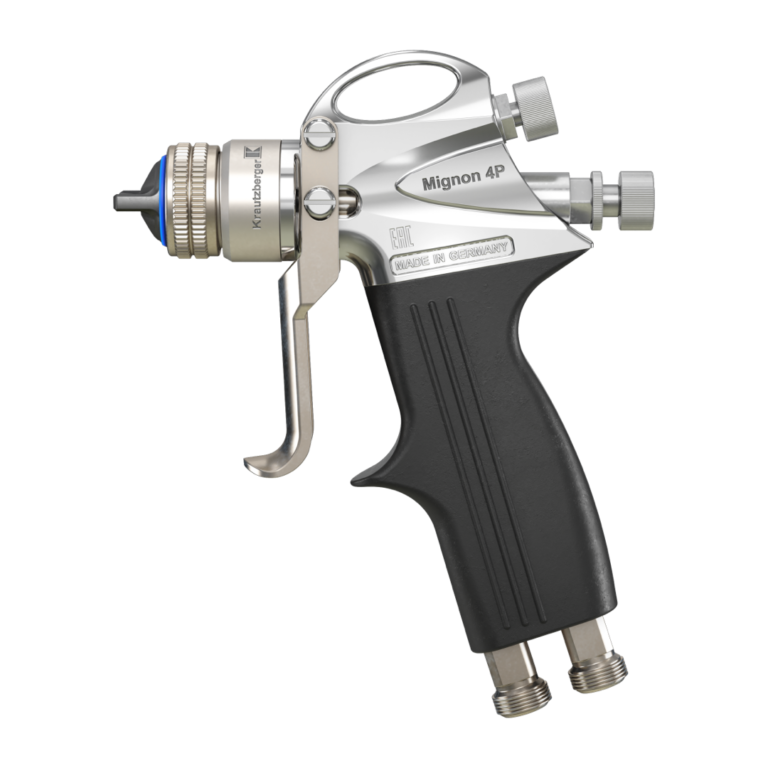
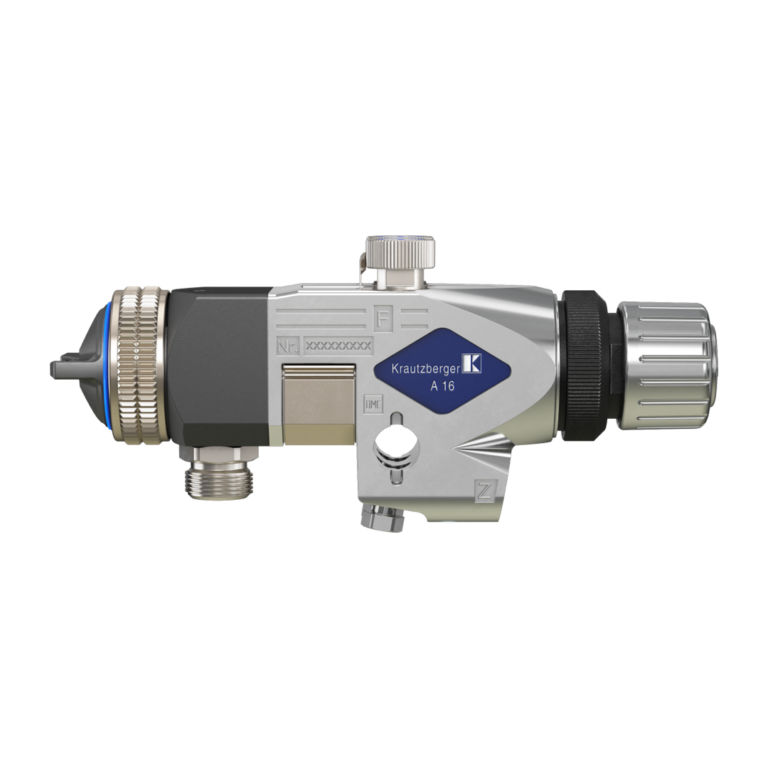
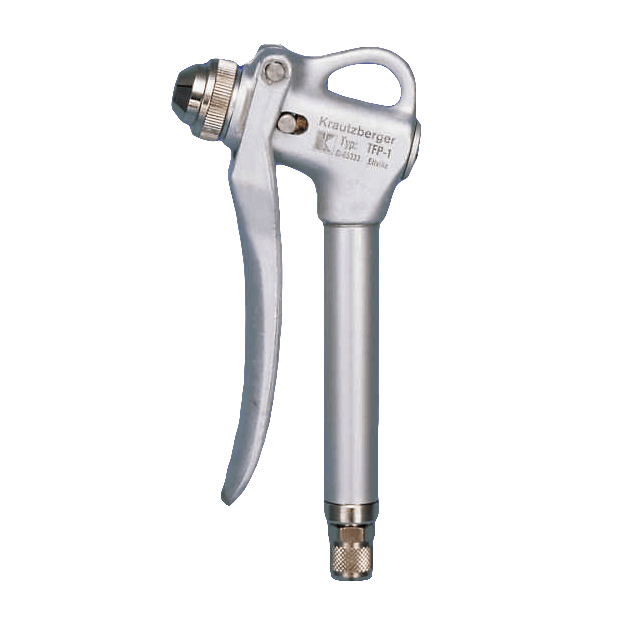
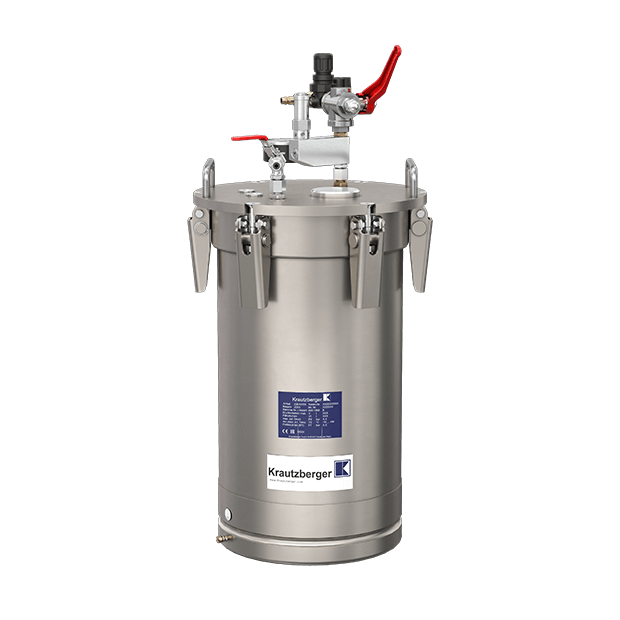
Krautzberger treats application and material supply as a connected system. Depending on the task, manual and automatic spray guns, suitable air and material nozzles, material pressure tanks, diaphragm pumps, pump and lifting stations, and material pressure regulators can be combined.
In automated processes, spray guns can be integrated into mounts, lifting devices, axes or robots. Material changeover valves and flushing equipment support applications with several colours or media. The specific selection depends on viscosity, solids content, application quantity, cycle time and component geometry.
For fine surface finishes, various XLINE nozzle combinations and spray patterns are available. With highly viscous, abrasive or sedimenting media, sufficiently large flow cross-sections, suitable material combinations, agitators and pressure-stable delivery become more important.
The focus is on robust hand or automatic spray guns, flat jet nozzles, material pressure vessels or pumps, material pressure controllers and lifting or traversing equipment depending on the system. The technically and economically suitable combination is selected for the specific medium, components and required production output.
Typical components and areas of application
The application is used in different industries and component groups. Typical examples are:
- Prefabricated trays
- Wall and ceiling elements
- Concrete tubes and boxes
- Production of plaster, stone and moulded parts
- manual construction site and repair applications
- automated formwork cleaning and release agent stations
From manual application to automated installation
Manual systems offer flexibility in changing formwork. In prefabricated parts plants, the spray station can be processed along the formwork or integrated into an automated preparation station.
In addition, component feed, extraction or ventilation, cleaning, media change and accessibility for maintenance work must be taken into account during the system integration. This keeps the process stable not only in the pattern run, but also in everyday production.
Advantages of a coordinated spray solution
- even separation film and clean deforming
- reduced release agent consumption
- less residues and rework
- improved visible concrete quality
- robust and maintenance-friendly application
- scalable for different formwork sizes
Application trials at the Krautzberger technical centre
Liquid media and coating materials with similar names can differ considerably in viscosity, solids content, solvent base, wetting and drying. A reliable choice of spray gun, nozzle and material supply should therefore be made using the original material and a representative component.
Application and concrete surface are assessed together, as release agent quantity, formwork material and concrete system influence the result.
On this basis, the spray pattern, material quantity, pressure, distance, movement and cleaning sequence can be defined. The result is an application solution suited to the medium, the geometry and the intended production process.
Related products
All products

Matching solution for your process
Looking for a spray gun, an automatic spray gun or a complete material supply for this process? Krautzberger helps you select and design suitable spray technology, nozzle configurations, delivery and regulation.
Contact Krautzberger to discuss your medium, component, production volume and desired result. Together, we assess how the process can be implemented safely and economically.
Industries for this application
On concrete moulds, a thin, uniform film of formwork oil supports clean demoulding and a high-quality exposed-concrete finish. Too much release agent can leave stains, pores or deposits, so dosing matters as much as surface coverage.
