

Aplicación: Apply liquid media precisely in battery cell and module production
Spraying processes in battery production
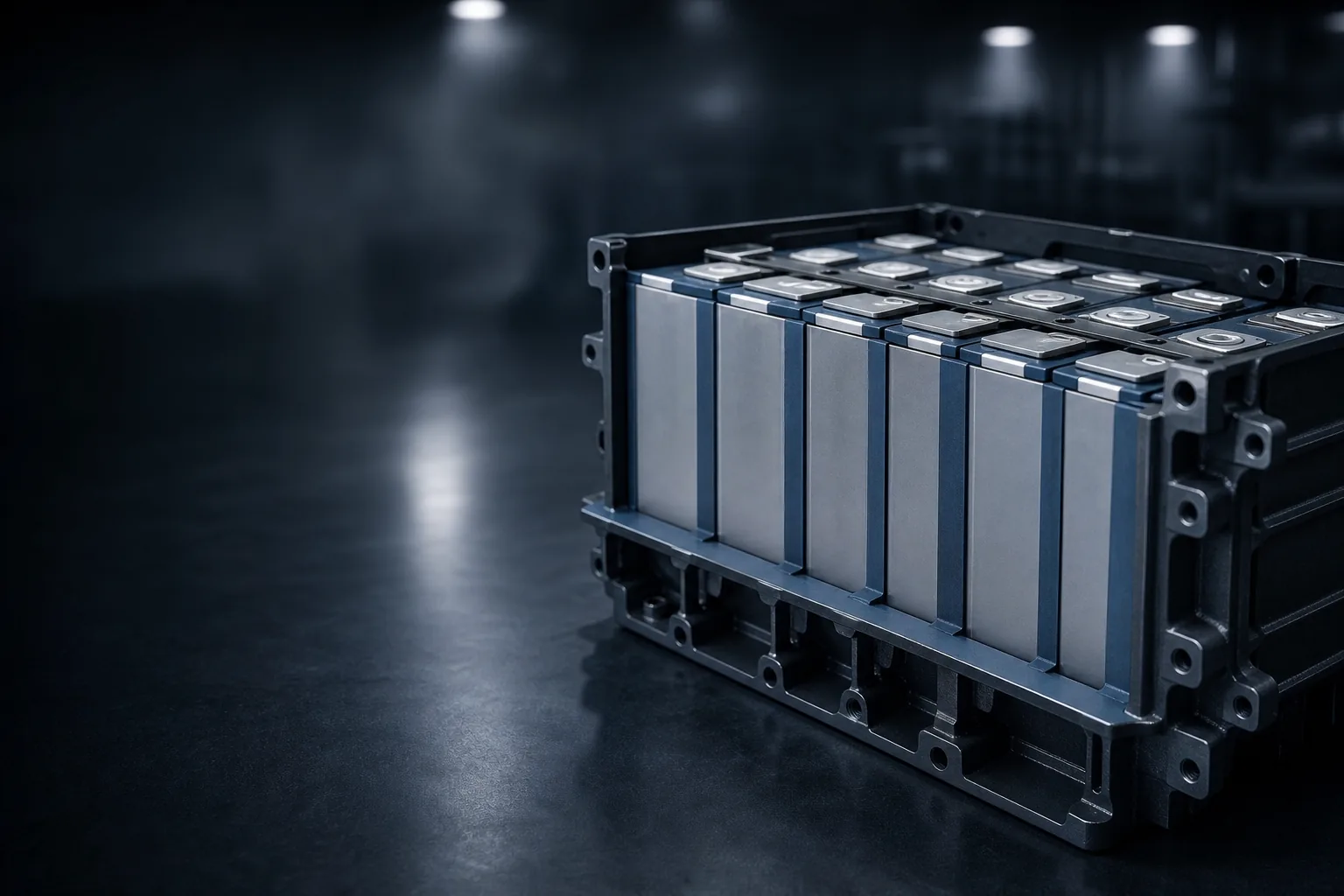
Manufacturing battery cells, modules and battery housings involves numerous process steps. Krautzberger focuses on applications in which pumpable liquid media are atomised precisely and applied to components. Subject to material approval, these include insulating and protective coatings, primers, adhesives, corrosion protection, marking colours or other functional media.
The requirements are clearly different from classic visual coatings. Often electrical safety, defined layer thickness, clean edge areas and a reproducible application on complex geometries are in the foreground.
Typical components and coating tasks
Typical fields of application can be:
- Cell casings and mantle surfaces
- Modules, modular frames and battery housings
- Cooling plates, supports and structural components
- electrically insulated edges, surfaces and contact areas
- Corrosion protection on metallic housing parts
- Primers and adhesive agents before bonding or sealing processes
- Markings and test markings
- selective protective coatings on approved components
Electrical insulation and functional layer thickness
For electrically insulating coatings, the layer must be continuous and sufficiently uniform over the relevant area. Defects, pores or areas that are too thin can impair function. Excessive application increases material consumption, drying time and component weight. Edges, radii and transitions need particular attention.
The final electrical function is determined by the coating material, layer thickness, hardening and component design. These properties must be validated by the operator and material manufacturer. The application technology ensures that the required wet layer is reproducibly applied.
Requirements for cleanliness and process stability
Battery components are often processed in clean, heavily monitored manufacturing environments. Therefore, a controlled material flow, little overspray and well-planned cleaning processes are important. In case of moisture-sensitive or reactive media, storage, pot life and material compatibility must also be taken into account.
- defined layer width and quantity
- precise limitation of contact and functional surfaces
- constant material pressure during cycled processes
- low carry-over in adjacent areas
- suitable materials and seals for the medium
- Short, documentable rinsing and maintenance procedures
Clear delimitation of sprayable battery applications
Not every coating step in battery production is a classic spraying process. Electrode coatings on continuous films are often produced using specialized roll-to-roll processes. Krautzberger solutions are particularly useful where liquid media should be applied to three-dimensional components, housings, edges, partial surfaces or smaller series.
Depending on the process, these include electrical insulation layers, protective coatings, primers, corrosion protection, marking paints or suitable adhesives. This clear demarcation prevents a spray solution from being provided for a process in which another coating process is technically or economically more suitable.
- three-dimensional cell and module components
- Edges and selected insulation surfaces
- Protection and corrosion coatings
- Primer and detention agent
- Marking and testing media
Krautzberger Application and Material Supply Technology
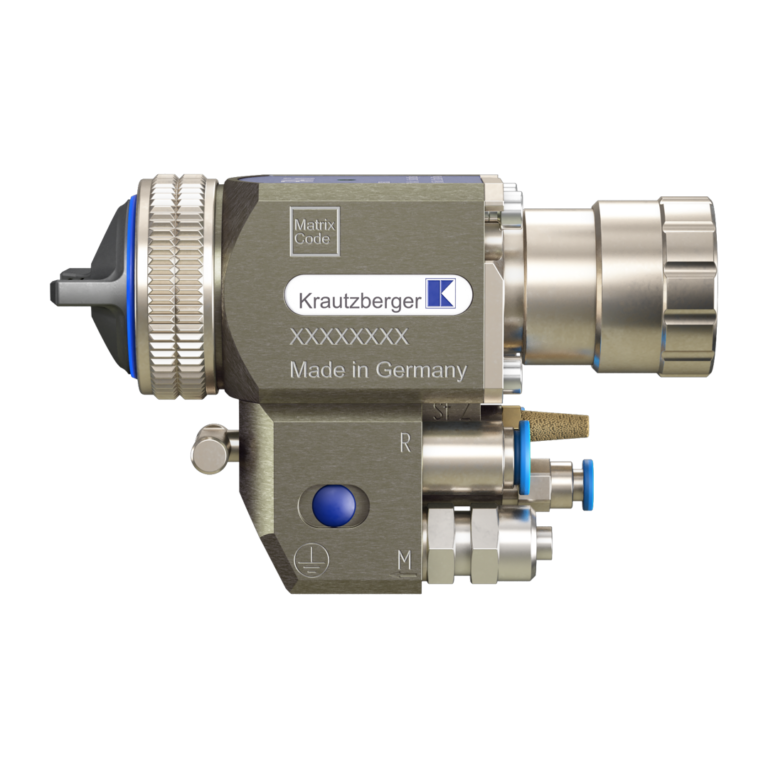
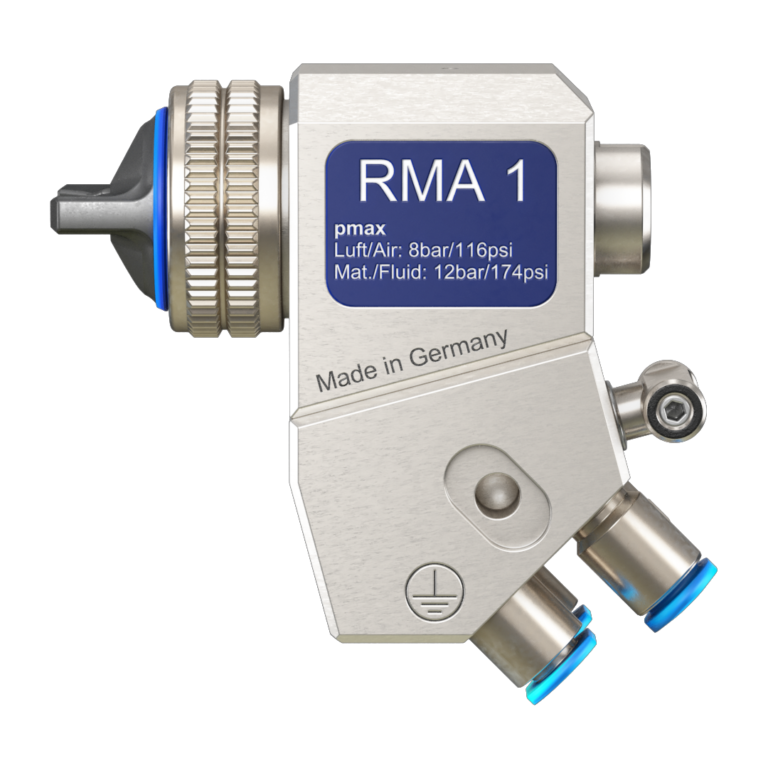
Depending on the component and quantity of application, fine manual spray guns, compact automatic spray guns or several devices can be used in an automated system. Different beam shapes allow narrow, wide or specifically limited jobs. Material pressure vessels, diaphragm pumps, pump lift stations and material pressure controllers are selected to match viscosity, consumption and container size.
Material change valves and flushing concepts are available for frequent media changes or multiple coating substances. In automated lines, spray guns can be integrated on axes, robots or customer-specific handling systems.
Automation, variants and traceability
Battery components are often produced in a variety of series. Geometry, coating zone and required amount of material can differ between cell, module or housing formats. Recipes for spray distance, pressure and switching time facilitate conversion and support reproducible results.
The application can be connected with customer-side component recognition and process data acquisition. This allows shared parameters to be documented and deviations to be detected faster. The concrete traceability is integrated into the higher-level system control.
- recipe-based conversion
- Component detection and spray release
- Monitoring of pressure and switching times
- Connection to customer-side process documentation
Benefits for your production
- Reproducible layer distribution on battery components
- precise partial surface and edge coating
- reduced material consumption due to adapted atomisation
- Stable material supply in automated processes
- Flexible adaptation to different cell and module formats
- joint design of spray technology and material supply
Process development in the Krautzberger technical test centre
For battery applications a selection according to data sheet is not enough. In the Krautzberger technical test centre, original medium and representative sample components are tested. It is possible to evaluate conveyorability, atomisation, spraying image, application quantity, edge cover, cleaning and automation.
The electrical, thermal or chemical function of the layer is then validated by the operator and material supplier. Krautzberger creates the reproducible application conditions on the basis of which the process can be released.
Related products
All products
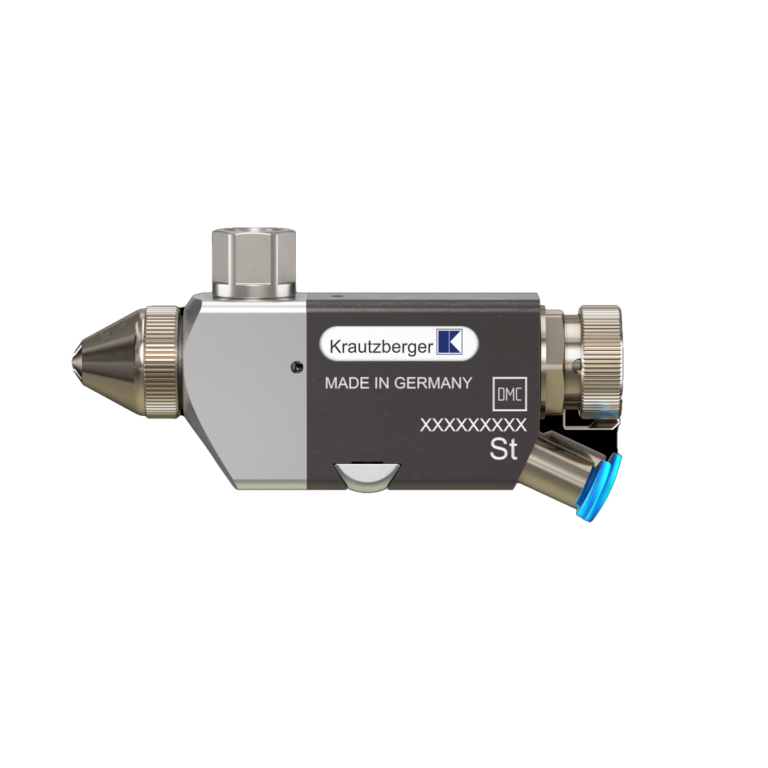
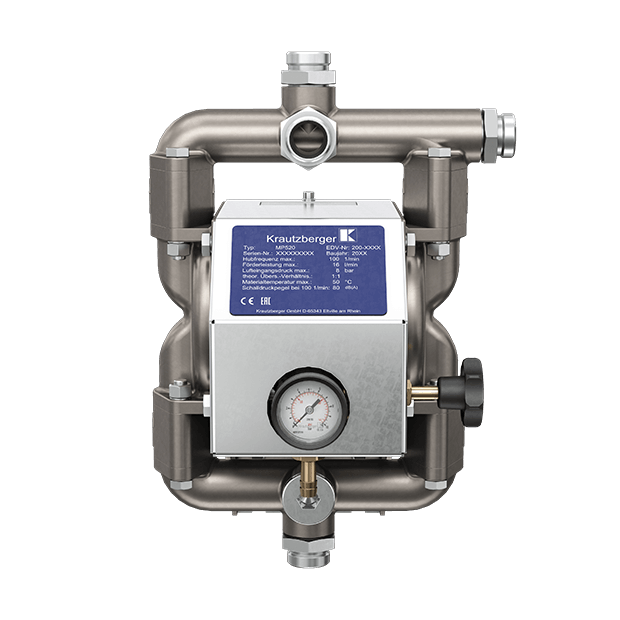

Suitable solution for your battery application
Are you looking for an automatic sprayer, paint gun or a complete material supply for insulation, protective or adhesive applications in battery production? Krautzberger supports you with the technical design.
Talk to us about medium, component, required layer, cycle time and system concept.
Industries for this application
Liquid media are used on battery cells, modules and housings for protection, insulation, adhesion or marking. The specific task determines the precision required for application and the requirements of the respective manufacturing environment.

