


Application: Coat technical glass and precision glass components
What this application is about
In practice, solutions range from flexible manual workstations to indexed, robot-assisted series-production systems. The spray equipment, material supply and movement sequence must be suited to the coating material and the workpiece.
Functions of coatings on technical glass
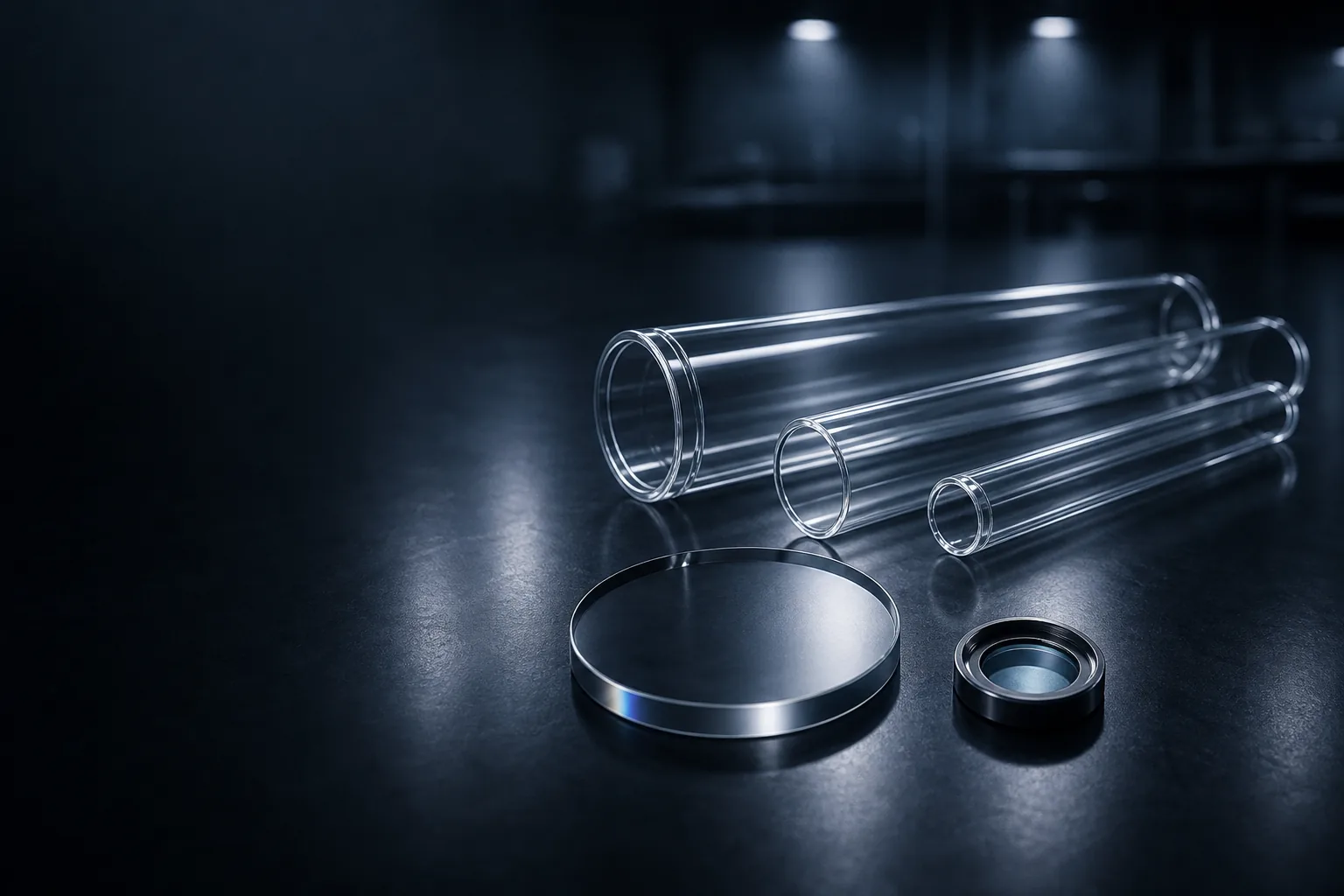
The application mainly concerns glass tubes, ampoules, test tubes, cover glasses, optical and technical fittings. The required effect occurs only when coating material, substrate, layer thickness and subsequent drying or curing fit together. The spraying process must therefore be adapted to the concrete material system and the real production conditions.
Alongside surface quality, material consumption, cleaning effort, system availability and reliable repeatability also matter. A sound technical solution therefore combines controlled atomisation with a stable material supply that is easy to regulate.
Typical requirements for the spraying process
Even small fluctuations in material pressure, viscosity, distance or movement control can change the coating visibly or functionally. Typical requirements include:
- precise coating of small and transparent components
- Internal and external surfaces with narrow tolerances
- Visible errors with low shift deviation
- Clearance of sealing and contact zones
- clean material management and low particle load
- Adjustment to rotational symmetric geometries
Consider the geometry, appearance and function of the glass
Technical glass includes tubes, laboratory glass, optical components, cover glasses and special components. Coatings can take over protection, wetting, electrical insulation, marking or optical functions. The required layer is often very thin and must also be evenly distributed on small or rotationally symmetrical geometries.
Glass cleaning, surface pretreatment and particle-free handling significantly influence the result. In the case of inner surfaces, nozzle extensions or directed spray heads may be required.
- Uniform thin layer of function
- clean optical surface
- Internal, external and partial surface coating
- precise masking
- coordinated drying or curing
Krautzberger solutions for spray application and material supply
Krautzberger treats application and material supply as a connected system. Depending on the task, manual and automatic spray guns, suitable air and material nozzles, material pressure tanks, diaphragm pumps, pump and lifting stations, and material pressure regulators can be combined.
In automated processes, spray guns can be integrated into mounts, lifting devices, axes or robots. Material changeover valves and flushing equipment support applications with several colours or media. The specific selection depends on viscosity, solids content, application quantity, cycle time and component geometry.
For fine surface finishes, various XLINE nozzle combinations and spray patterns are available. With highly viscous, abrasive or sedimenting media, sufficiently large flow cross-sections, suitable material combinations, agitators and pressure-stable delivery become more important.
The focus is on Mikro- and automatic spray guns, fine nozzles, extensions for internal surfaces, rotary machines, small material pressure vessels and precise pressure regulators. The technically and economically suitable combination is selected for the specific medium, components and required production output.
Components, industries and fields of application
The application is used in different industries and component groups. Typical examples are:
- Test tube and laboratory glass
- Ampoules and pharmaceutical primary glass after customer-specific validation
- Glass tubes and capillaries
- Sensor and optical components
- Cover lenses and technical windows
- Marking, sliding and protective coatings
Manual, partially automated or fully automatic
Components can be rotated, indexed or moved along a nozzle. In the case of internal coatings, the extension is defined and withdrawn.
In addition, component feed, extraction or ventilation, cleaning, media change and accessibility for maintenance work must be taken into account during the system integration. This keeps the process stable not only in the pattern run, but also in everyday production.
Result for quality and economy
- precise coating of small glass geometries
- even interior and exterior areas
- Low use of materials
- Reproducible production processes
- Flexible partial and full coating
- integration into rotary and indexed systems
Tests with original material and sample components
Liquid media and coating materials with similar names can differ considerably in viscosity, solids content, solvent base, wetting and drying. A reliable choice of spray gun, nozzle and material supply should therefore be made using the original material and a representative component.
Wetting, optical quality, interior cover, drying and function are evaluated with original glass.
On this basis, the spray pattern, material quantity, pressure, distance, movement and cleaning sequence can be defined. The result is an application solution suited to the medium, the geometry and the intended production process.
Trials at the Krautzberger technical centre
At the Krautzberger technical centre, the process can be tested with the original medium and representative sample components. Conveyability, spray pattern, application quantity, material pressure, distance, movement and cleaning are coordinated during these trials.
The trials provide a reliable basis for selecting the spray gun, nozzle, material supply and degree of automation. Final functional and process approval is issued by the operator together with the material manufacturer.
Related products
All products
Contact for your application
Looking for a spray gun, an automatic spray gun or a complete material supply for this process? Krautzberger helps you select and design suitable spray technology, nozzle configurations, delivery and regulation.
Contact Krautzberger to discuss your medium, component, production volume and desired result. Together, we assess how the process can be implemented safely and economically.
Industries for this application
In laboratory, medicine and electronics technical glass fulfils different tasks. Depending on the application, different properties count, from wetting behavior to protection; therefore coating material and spray process must fit the workpiece.


