

Application: Apply decorative and functional coatings to perfume bottles and packaging glass
High-quality surfaces on transparent glass
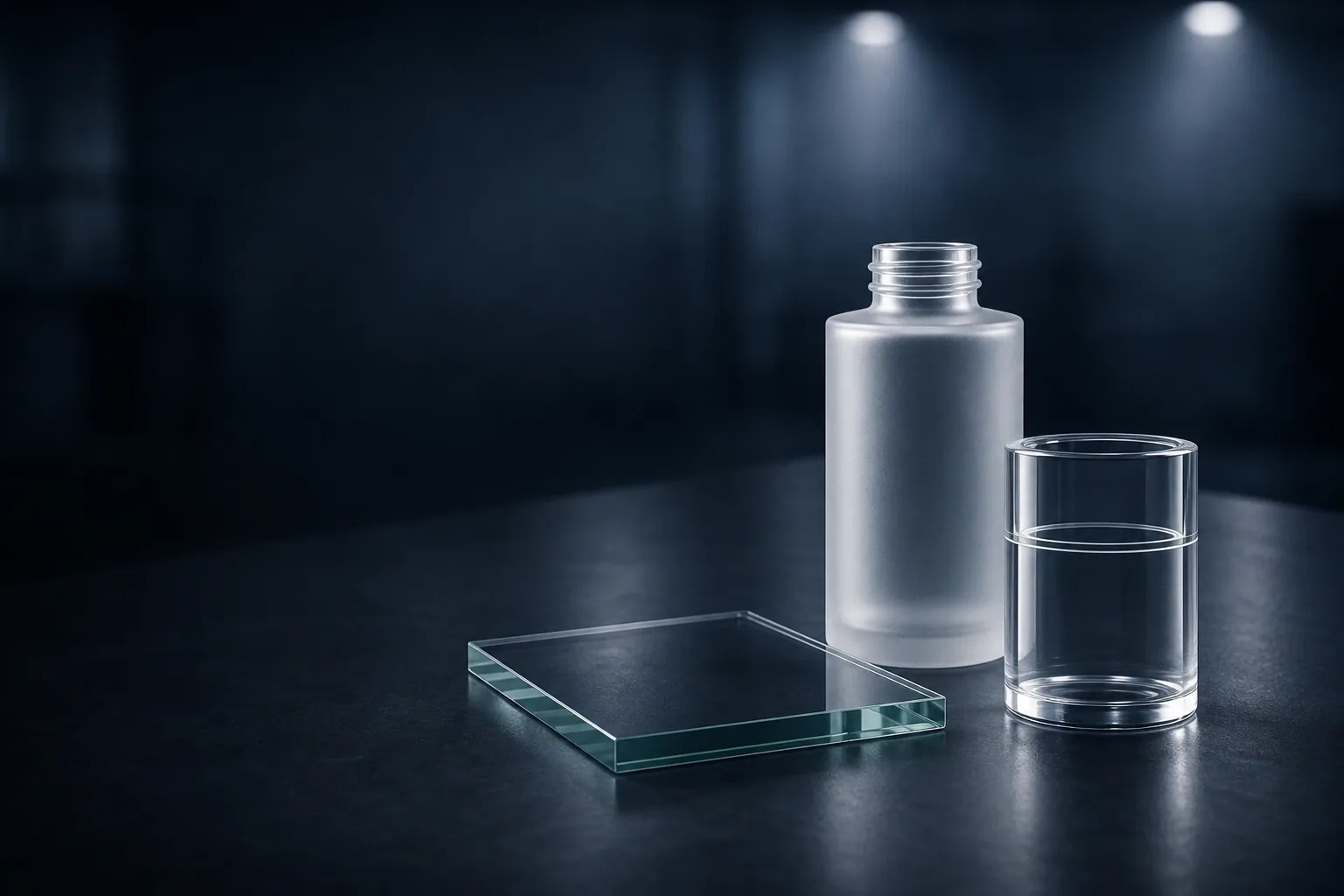
Perfume bottles, cosmetic containers and other packaging glass receive liquid coatings to provide colour, gloss, a matt finish, tactile properties or protection. The transparent and often highly glossy original surface makes even small variations visible. Shoulders, edges, radii and base areas must also be reached uniformly.
Depending on the batch size, the coating is carried out manually, with automatic spray guns or in circular and continuous systems. For rotationally symmetrical containers, a defined rotation movement supports the uniform all-round coating.
Decorative and functional coatings
- Colour and effect coatings
- Matt, frost and soft-touch optics
- transparent, translucent or covering coatings
- Finishing of the process and partial surface
- Protective coatings against scratches or chemical influences
- Adhesive primers for further decorating processes
- UV-curing or conventionally drying glass lacquers
Avoid optical errors consistently
Clouds, runs, dry areas, dust inclusions and uneven overlaps are particularly noticeable on glass. Wetting depends heavily on glass cleaning, pretreatment and coating material. A defined wet layer and a quiet spray pattern are therefore crucial.
- fine and uniform atomisation
- Reproducible layer on 360 degree geometries
- clean edges and defined transitions
- low overspray for high-quality varnishes
- fast color and material change
- coordinated ventilation, drying or UV curing
Color change, masking and quality control
In perfume and cosmetic packaging, colours, effects and flaming often change. A low dead volume in pipes and apparatus reduces material residues and facilitates the change between small batches. Rinsing sequences, material replacement valves and clearly defined cleaning processes help to avoid paint spreads.
Threads, sealing surfaces, labelling areas or subsequent decorative zones may need masking. Quality control evaluates colour shade, gloss, transparency, hiding power and uniformity on the original glass. Even small coating differences can be visible, especially with translucent varnishes.
- low dead volume with small batch sizes
- Reproducible positioning of the bottle
- Masking of threads and functional surfaces
- clear release patterns for color and shine
- clean flushing with frequent material changes
Krautzberger Technology for Flacons and Packaging Glass
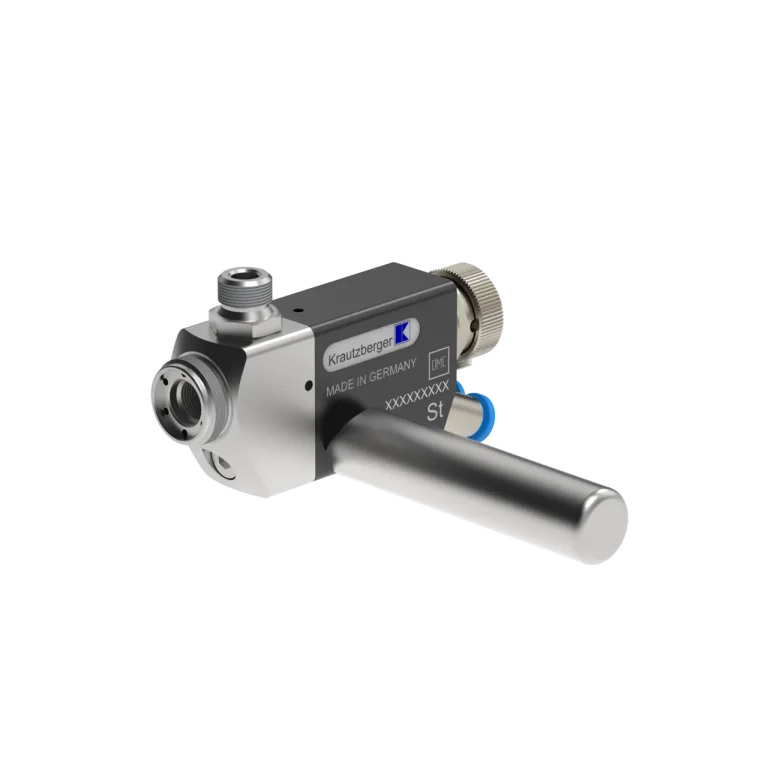
Compact manual spray guns can be used for samples, manual work stations and small series. In series production, automatic spray guns with finely adjustable spray pattern, material pressure vessels or diaphragm pumps as well as precise material pressure controllers are considered.
Circular automats and rotating component mounts allow for a uniform coating of rotationally symmetrical bottles. Lifting movements and several spray stations can process different areas of the container. Material exchange valves and flushing devices support frequent colour changes.
Automation for different flange conforms
In the case of changing flange conformants, the intake must safely guide the glass without damaging any visible surfaces. Height, diameter and center of gravity influence speed and spraying distance. For asymmetrical flacons, a pure rotation cannot be sufficient; then lifting motion, component orientation or several spray directions are combined.
In an automated line, recipes for flaming, varnish, speed and spray time can be stored. This allows you to reuse shared settings and make product changes faster.
- adapted shots for different geometries
- Reproducible speed and position
- Recipe management for varnish and bottle
- Control of scrap and colour change times
Process parameters for all-round and partial surface painting
Speed, spray spacing, lifting speed and overlap determine the layer distribution. In conical or strongly waisted bottles, the movement must be adapted to the geometry. Masks may be required if threads, sealing surfaces or decorative areas are to remain free.
The positioning on the mounting and the cleanliness of the component also have a direct impact on the result. In case of high optical requirements, coating, ventilation and drying should be considered as a continuous process.
Benefits for your production
- High optical uniformity
- Reproducible all-round and partial surface coating
- Flexible processing of different flange conforms
- Low material consumption
- fast conversion during color and product changes
- manual and automated solutions from a system world
Coating tests in the Krautzberger technical test centre
Glass coatings differ in wetting, solid matter content, colour effect and hardening. Original bottles and coating material can be tested in the technical test centre. The spray pattern, speed, amount of application, overlap, ventilation and cleaning are coordinated with each other.
The visible result is evaluated together with the customer and serves as the basis for the selection of spray gun, material supply and automation.
Related products
All products
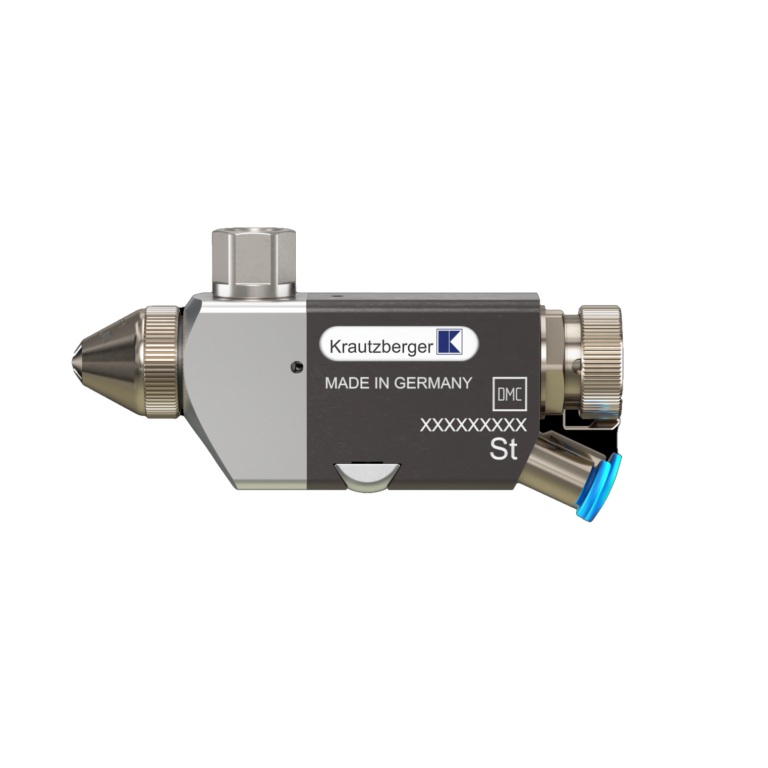

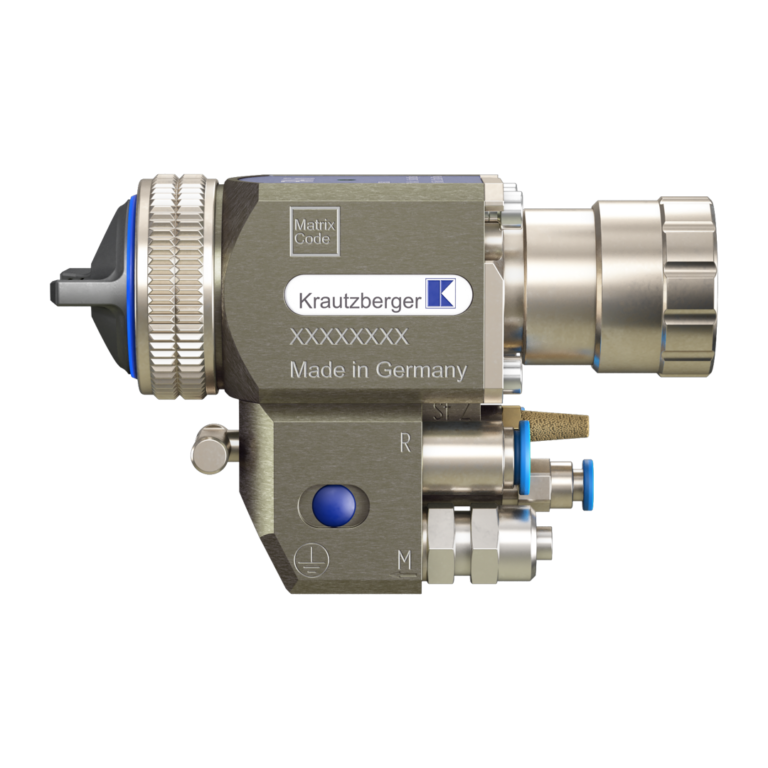
Suitable solution for your glass packaging
Are you looking for a paint gun, an automatic sprayer or a complete coating system for perfume bottles and packaging glass? Krautzberger supports you in the design.
Talk to us about Flaconformity, varnish, quantity, color change and desired surface.
Industries for this application
For perfume bottles and other packaging glass, shoulders, edges and radii immediately reveal whether the varnish was applied evenly. Even in glass containers for medicine and pharmaceuticals, transparent surfaces make small deviations visible.

