

Application: Coat the inside of pipes and hollow bodies using 360-degree spray technology
What this application is about
The right solution starts with the entire process rather than an individual gun. Spray pattern, nozzle design, material pressure, delivery, component movement and cleaning must be considered together to keep the application stable and repeatable.
Purpose and benefits of the coating
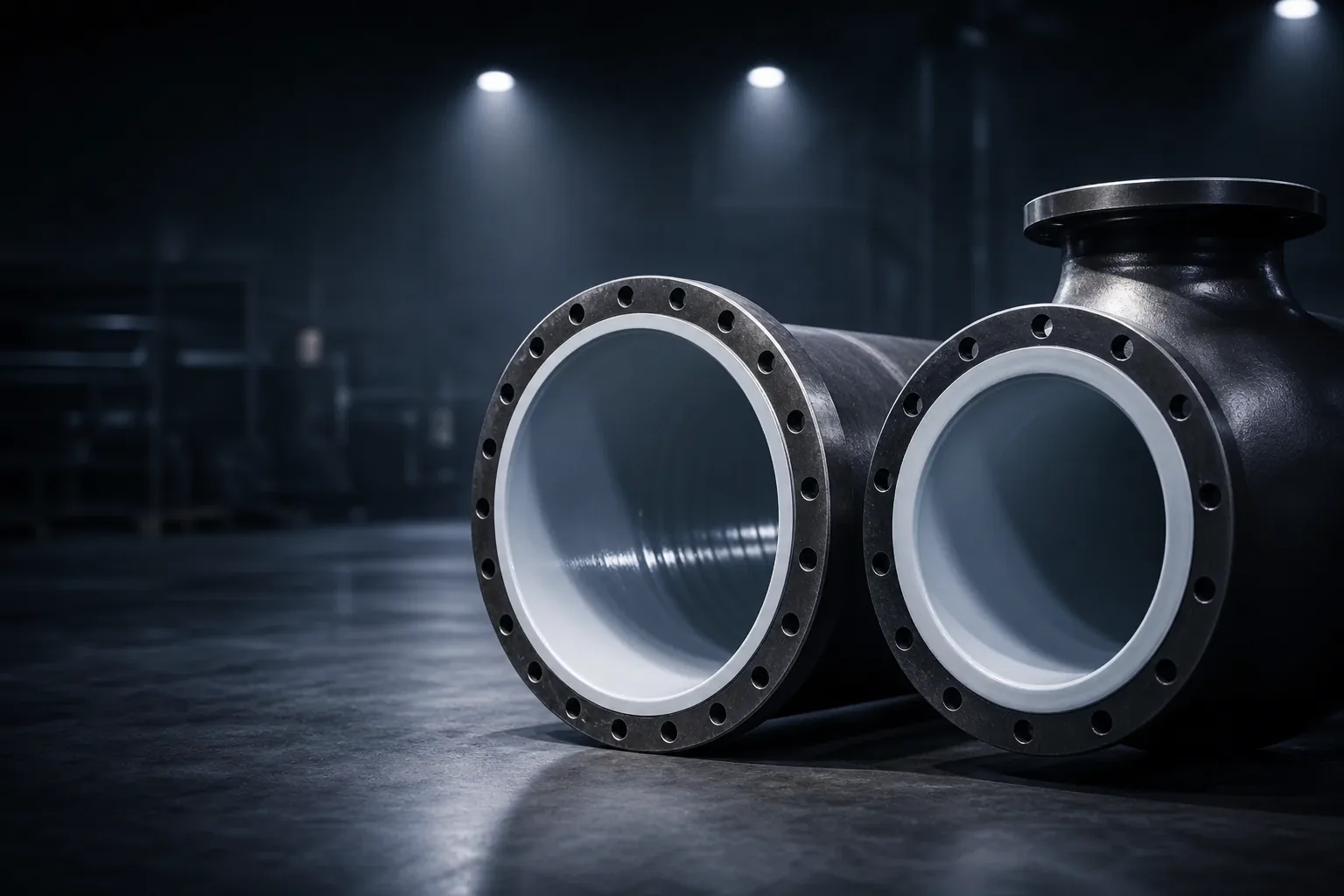
The application mainly concerns metal, plastic and composite pipes as well as closed or semi-open hollow bodies. The required effect occurs only when coating material, substrate, layer thickness and subsequent drying or curing fit together. The spraying process must therefore be adapted to the concrete material system and the real production conditions.
Alongside surface quality, material consumption, cleaning effort, system availability and reliable repeatability also matter. A sound technical solution therefore combines controlled atomisation with a stable material supply that is easy to regulate.
What matters with the application
Even small fluctuations in material pressure, viscosity, distance or movement control can change the coating visibly or functionally. Typical requirements include:
- even all-round coverage without direct view
- constant application along the entire component length
- Adaptation to different diameters and contours
- Avoiding material accumulation at the pipe entrance
- Stable promotion through extensions and long lines
- clean entry and exit of the spraying technology
Adjust the spray head and motion sequence to the geometry
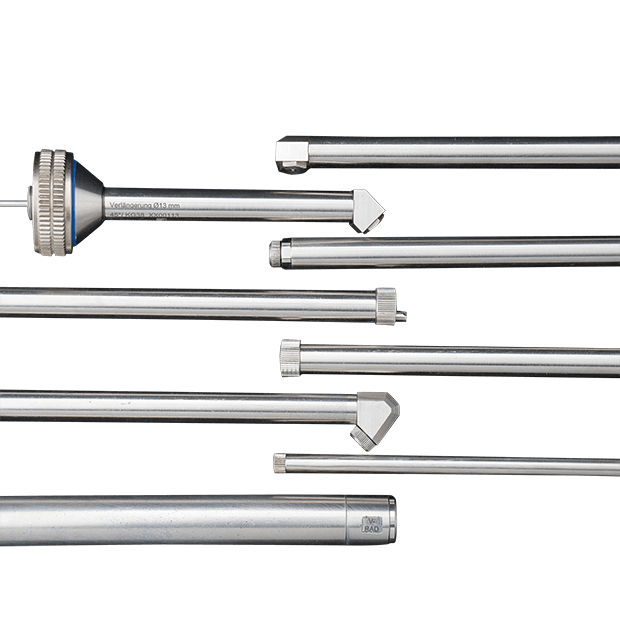
For pipes and hollow bodies, the internal diameter, length, opening and geometry determine the choice of extension and spray head. A 360-degree spray pattern can reach the entire inner wall; directed spray jets are more suitable for other components.
Layer thickness and overlap result from quantity of material, rotation as well as insertion or withdrawal speed. The exhaust air must reliably remove the solvent or water from the interior.
- Internal diameter and component length
- 360 degree or directional spray pattern
- Insertion, withdrawal and rotational speed
- Avoiding material accumulation
- Ventilation, drying and visual inspection
Spraying technology and material supply from Krautzberger
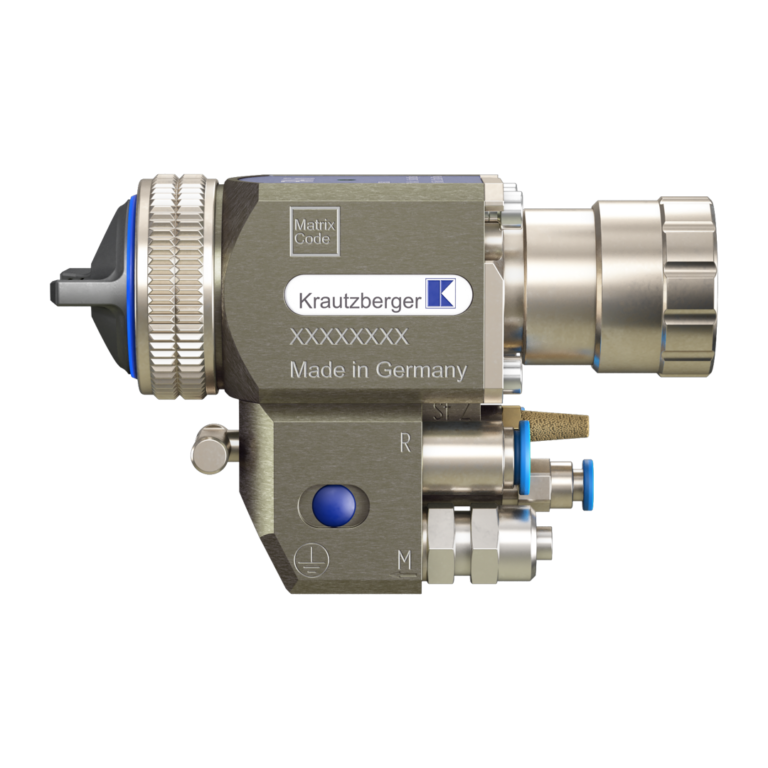
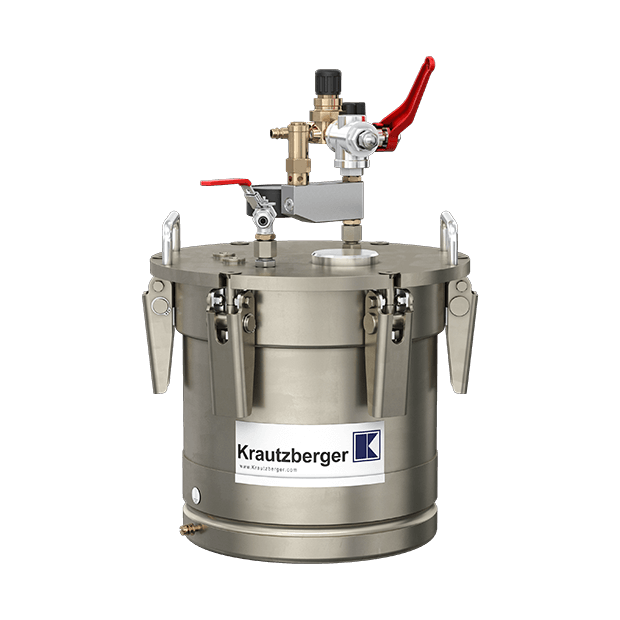
Krautzberger treats application and material supply as a connected system. Depending on the task, manual and automatic spray guns, suitable air and material nozzles, material pressure tanks, diaphragm pumps, pump and lifting stations, and material pressure regulators can be combined.
In automated processes, spray guns can be integrated into mounts, lifting devices, axes or robots. Material changeover valves and flushing equipment support applications with several colours or media. The specific selection depends on viscosity, solids content, application quantity, cycle time and component geometry.
For fine surface finishes, various XLINE nozzle combinations and spray patterns are available. With highly viscous, abrasive or sedimenting media, sufficiently large flow cross-sections, suitable material combinations, agitators and pressure-stable delivery become more important.
The focus is on hand or automatic spray guns with straight extensions, 360-degree rotation or circular jet nozzles, material pressure vessels or pumps and precise material pressure controllers. The technically and economically suitable combination is selected for the specific medium, components and required production output.
Typical applications
The application is used in different industries and component groups. Typical examples are:
- Corrosion protection in pipes
- Internal painting of technical hollow bodies
- Container and cylindrical components
- Sliding and non-stick layers
- Oil and protective film
- Tubes with additional external marking or marking
Process integration and automation
The nozzle is moved through the pipe at a defined speed. The amount of spray, the speed of retreat, the distance to the inner wall and, if necessary, the rotation of the component determine the layer distribution.
In addition, component feed, extraction or ventilation, cleaning, media change and accessibility for maintenance work must be taken into account during the system integration. This keeps the process stable not only in the pattern run, but also in everyday production.
Benefits for your production
- Complete inner surface cover
- Reproducible layer over length and circumference
- less rework in inaccessible areas
- Flexible adaptation to pipe diameter
- Controlled material consumption
- automatic entry and retreat movement
Process design at the Krautzberger technical centre
Liquid media and coating materials with similar names can differ considerably in viscosity, solids content, solvent base, wetting and drying. A reliable choice of spray gun, nozzle and material supply should therefore be made using the original material and a representative component.
Sample tubes are used to determine range, spray angle, quantity of material and retreat speed, then visually or metrologically evaluate the inner surface.
On this basis, the spray pattern, material quantity, pressure, distance, movement and cleaning sequence can be defined. The result is an application solution suited to the medium, the geometry and the intended production process.
Related products
All products

Find the right application solution together
Looking for a spray gun, an automatic spray gun or a complete material supply for this process? Krautzberger helps you select and design suitable spray technology, nozzle configurations, delivery and regulation.
Contact Krautzberger to discuss your medium, component, production volume and desired result. Together, we assess how the process can be implemented safely and economically.
Industries for this application
In the case of pipes and hollow bodies, the surfaces for protective, sliding or separating layers are often out of sight. In the construction subcontracting industry, vehicle production and defence technology, spray pattern and component movement must therefore be adapted to difficult-to-reach interiors.


